
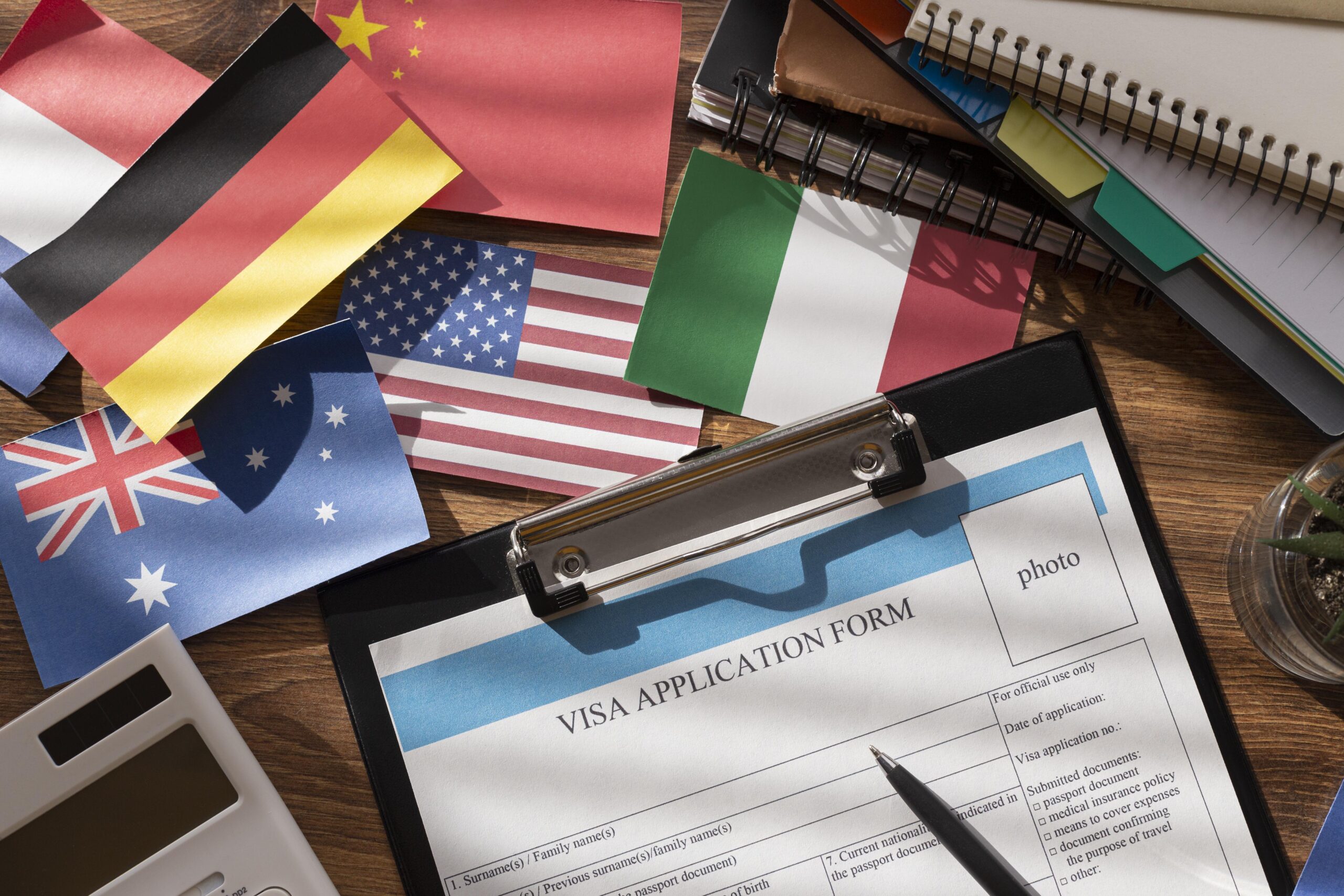
Documents for Working Abroad: Full Translation Checklist
Documents for working abroad are the very first thing every Ukrainian faces when planning employment in another country. A missing or incorrectly prepared translation can result in a visa refusal, prevent an employer from verifying your qualifications, or block local authorities from legalising your stay. In this article we have compiled a complete and up-to-date list of documents requiring translation, explained the requirements of different countries, and described how to correctly prepare your document package in 2026.
Why Translating Your Documents Is a Mandatory Step Before Working Abroad
Most countries do not recognise documents issued in Ukraine without an official translation. This applies to EU countries, the United Kingdom, the United States, Canada, Israel and other popular destinations for labour migration. An employer is required to verify your qualifications, and the immigration authority must confirm your identity and right to stay.
An official translation is not simply text in another language. It is a legally significant document prepared by a certified translator, notarised or apostilled depending on the requirements of the destination country. Without such a translation your documents are just paper.
Full List of Documents to Translate When Seeking Employment Abroad
Below is a structured checklist current as of June 2026. The specific set of documents depends on the country, type of work and whether a relevant agreement exists between Ukraine and the destination state.
1. Identity Documents
- Ukrainian passport (international and/or domestic) — translation with notarised translator’s signature
- Criminal record certificate — mandatory for most work visas and residence permits
- Birth certificate — required when applying for a family residence permit
- Marriage / divorce certificate — if relocating with a partner or changing your surname
2. Education and Qualification Documents
- Higher or vocational education diploma — translation + apostille or nostrification depending on the country
- Diploma supplement / academic transcript — required to confirm the level and specifics of your specialisation
- Secondary school certificate — if higher education was completed abroad or you are applying as a trainee
- Certificates of completed courses — IT certifications (AWS, Google, Microsoft), medical licences, teaching credentials
- Driving licence — when applying for driver, courier or logistics positions
3. Employment Documents
- Work record book (трудова книжка) — full translation with notarisation; some countries require extracts covering the past 5–10 years
- Letter from employer / reference letter
- Employment contract (if a preliminary agreement with a foreign employer already exists)
- CV / résumé — a certified translation is sometimes required for H-1B (USA) or Blue Card (EU) applications
4. Medical Documents
- Health record book — mandatory for healthcare workers, teachers and food-industry employees
- Medical fitness certificate (form 086-У or equivalent) — confirms fitness for work
- Medical records / patient history extract — for obtaining insurance or a residence permit
- Vaccination record or certificate — several countries require proof of vaccination against specific diseases
- Psychiatric certificate — sometimes required for a firearms licence or work at a secure facility
5. Registration and Property Documents
- Certificate of registered address (form №13 or register extract)
- Property documents — if taking out a mortgage or renting abroad
- Extract from the Unified State Register (for sole traders / business owners)
6. Tax and Financial Documents
- Income statement / asset declaration — to prove financial solvency
- Bank account statement — required for certain types of work visas
- Tax identification number card — a translation may be needed to open a bank account abroad
Apostille, Notarisation or Legalisation: Which One Do You Need?
This is one of the most common questions we receive. The answer depends on the destination country.
Apostille
An apostille is a simplified form of legalisation that operates between member states of the Hague Convention. Most EU countries, the USA, Canada, Australia and the UK are signatories. The apostille is affixed in Ukraine to the original document, which is then translated. Important: the apostille is placed on the original, not on the translation.
Notarised Translation
A notary certifies the translator’s signature — not the accuracy of the translation — and this is an important distinction. Most EU countries accept translations with a notarised signature from a certified translation agency. This is the standard requirement in Poland, the Czech Republic, Germany and Austria.
Consular Legalisation
For countries that have not signed the Hague Convention (some Arab states, certain countries in Asia and Africa), consular legalisation is required — a multi-step procedure involving Ukraine’s Ministry of Foreign Affairs and the embassy of the destination country.
Country-Specific Requirements for the Most Popular Destinations in 2026
Poland
Poland remains one of the most popular destinations for Ukrainian labour migrants. To obtain a work permit (zezwolenie na pracę) or a Blue Card you will need: translated diploma, work record book, criminal record certificate and passport. Translations are done into Polish by a certified translator, ideally one listed in the register of sworn translators in Poland.
Germany
For work in Germany, nostrification of your diploma is critically important — the process of having your education recognised as equivalent to a German qualification. Translations must be into German. In addition to the diploma and its supplement, you will need translated work record book, criminal record certificate and identity documents. An apostille on the originals is mandatory.
Czech Republic
Work in the Czech Republic requires translation into Czech. Requirements are similar to Poland’s, but the Czech Republic takes a stricter approach to the nostrification of diplomas in medicine and education. For a residence permit (povolení k pobytu) and a work permit, translations of all key documents are required.
United Kingdom
Since Brexit, the UK has its own immigration system. For a Skilled Worker Visa you will need translations of your diploma, work record book and criminal record certificate. Translations must be into English and certified by a qualified translator. An apostille on the originals is mandatory.
USA and Canada
For US and Canadian work visas (H-1B, O-1, Express Entry, etc.) certified translations of all documents into English are required. Diploma and transcript translations are especially important — they are evaluated by accredited organisations such as WES or ECE. Any error can delay or halt the process.
Israel
Work in Israel requires translations into Hebrew or English. If you are applying for aliyah (immigration as a returning Jew), translations of a birth certificate, documents proving Jewish heritage, and a marriage certificate are required. For labour migrants, a translated diploma and criminal record certificate are mandatory.
How to Prepare Your Documents: A Step-by-Step Guide
- Determine the destination country and the type of work permit / visa — this defines the full list of documents.
- Gather the originals of all required documents.
- Check whether an apostille is required on the originals — if so, obtain it in Ukraine before translation.
- Order an official translation from a certified translation agency.
- Have the translator’s signature notarised (if required by the destination country).
- Check the final document package against the requirements of the embassy or employer.
Common Mistakes When Translating Documents for Work Abroad
Over the years at Translate Innova we have seen many different situations. Here are the most frequent mistakes that cost people time and money:
- Ordering a translation without an apostille. If the original requires an apostille, a translation without one will not be accepted — no matter how perfect it is.
- Using an uncertified translator. Online tools and freelancers without official certification cannot legally certify a translation. Official authorities reject such documents.
- Wrong target language. Some clients order a translation into English for Poland or the Czech Republic — this is a mistake. The translation must be into the official language of the destination country.
- Expired documents. A criminal record certificate is typically valid for 3–6 months, medical certificates for up to 1 year. Always check expiry dates.
- Missing diploma supplement translation. The diploma alone is not enough — employers and immigration authorities want to see the list of subjects and grades.
- Partial document translation. The translation must cover the entire text, including stamps, signatures and official markings.
How Long Does It Take to Translate Documents for Work Abroad?
The standard turnaround time is 1–3 business days depending on the volume and complexity of the documents. If there are many documents or urgent processing is needed, we offer an express service. Notarisation can usually be arranged the same day or the next day.
If you need an apostille on the originals, allow an additional 5–10 business days depending on the issuing authority.
Why Choose Translate Innova for Your Document Translations?
- Official translation agency with over 10 years of experience
- Translations into more than 50 languages, including Polish, Czech, German, English, Hebrew, French and others
- Certified translators whose signatures are notarised
- Full support: from advice on the document list to the final certified package
- Digital and hard-copy formats — convenient for clients already abroad
- Documents accepted by embassies, immigration services and employers in dozens of countries
Frequently Asked Questions (FAQ)
Can I order a translation if I am already abroad?
Yes. You can send scanned copies of your documents by email or messenger. We will send the completed translation in digital format, and dispatch the original by post to your address.
Will notarised translations from your agency be accepted in Poland, the Czech Republic and Germany?
Yes. Our translations with a notarised translator’s signature are accepted by official authorities in most EU countries. If needed, we provide a cover letter and advice on the specific requirements of your destination country.
How much does translating a document package for work abroad cost?
The cost depends on the number of pages, the target language and urgency. Please contact us for an exact quote.
What if I do not know exactly which documents I need?
Contact us — we offer a free consultation. Our managers are familiar with the requirements of different countries and will help you draw up the precise list of documents for your specific situation.
Summary: Key Takeaways
Preparing documents for work abroad is not a formality — it is a legally significant process. Whether you obtain a visa, sign an employment contract and legally reside in the country all depends on the quality of your translation. Do not take risks — trust your document translations to certified professionals.
Translate Innova is ready to support you at every step: from advice on the required document list to the final certified package that will be accepted in any country.
Ready to get started? Submit a request or order a callback — and we will prepare your documents quickly, accurately and in full compliance with the requirements of your destination country.
Useful materials on the topic:
Police Clearance Certificate with Apostille: How to Obtain and Properly Legalize It for Use Abroad
Preparing Documents for Traveling Abroad: Translation, Apostille, Notarization
Translation of Medical Documents for Treatment Abroad
How to Translate Documents for a Tourist or Work Visa: Professional Tips