
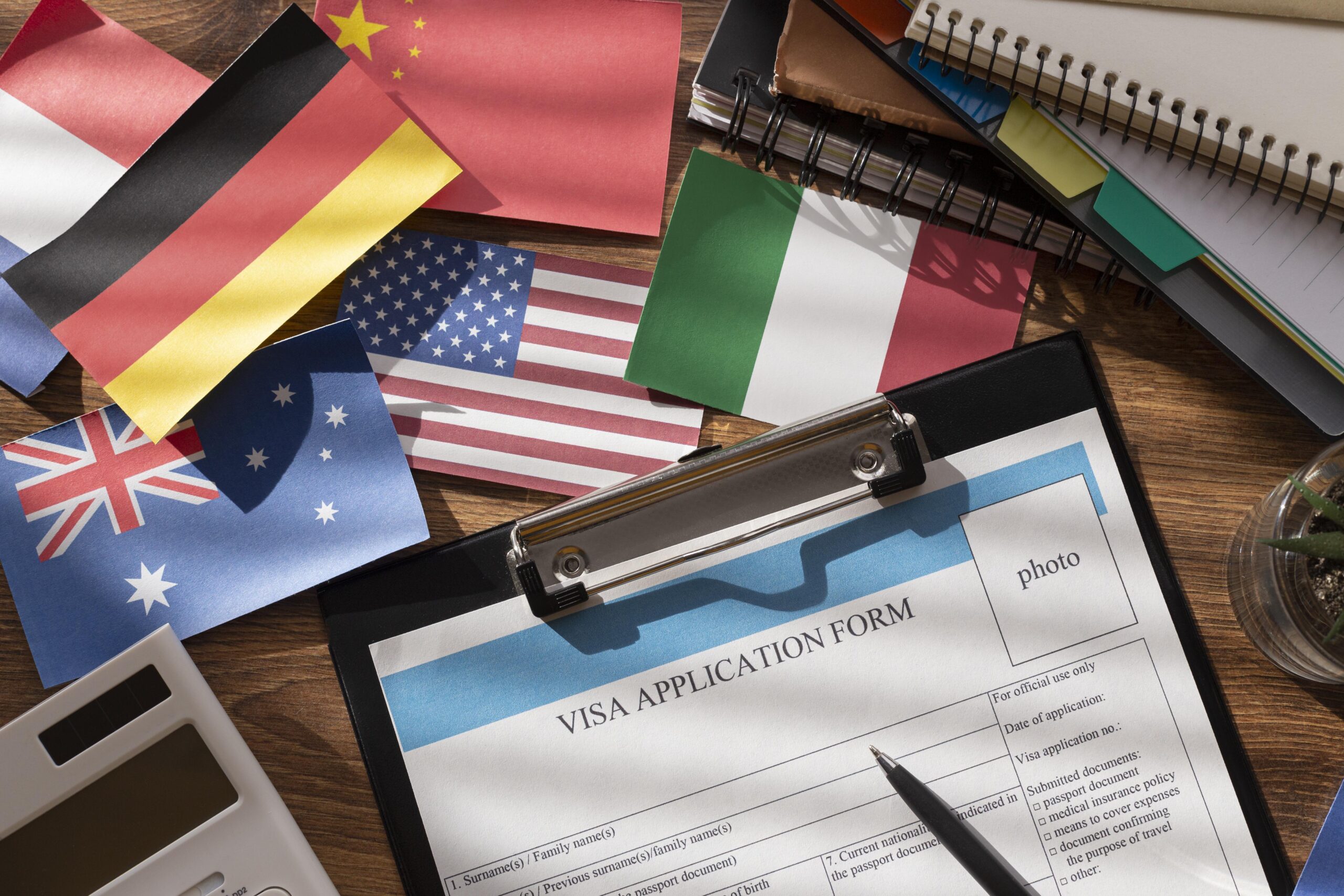
Documents for University Admission Abroad: Complete Guide for Ukrainians 2026
Documents for university admission abroad are where every successful study-abroad journey begins. It might seem straightforward — gather your papers, submit an application, and wait for a reply. But in practice, preparing documents for a foreign university involves dozens of nuances: what to translate, where to get an apostille, what to have notarized and in what order. A mistake at any stage can cost you not just time, but your place at the university.
In this guide, we have compiled up-to-date information as of June 2026: a complete list of required documents, explanations of legalization and translation procedures, country-specific requirements — and practical tips on how to navigate the whole process without unnecessary stress and delays.
Core Documents for University Admission Abroad
Regardless of the country and level of study (undergraduate, master’s, doctoral), most universities require a standard set of documents. Here is what the core package typically includes:
1. Educational Document (School Certificate or Degree)
This is the key document without which an application will not even be considered. For undergraduate programmes, you need a school-leaving certificate with its annex (transcript). For a master’s programme — a bachelor’s or specialist degree with a transcript. For doctoral programmes — a master’s degree.
Important: your educational document must be officially translated into the language of the country or into English. For most universities in Europe and North America, an English translation is sufficient. The translation must be carried out by a certified translator and authenticated — either by a notary or with the official seal of a translation agency.
2. Language Certificate
No serious university will process your application without proof of language proficiency. The most widely accepted options:
- IELTS Academic — from 6.0 for most programmes, from 7.0 for top universities
- TOEFL iBT — from 80–90 points
- Duolingo English Test — fully accepted by most universities in 2026 as an alternative
- For Germany — TestDaF or DSH; for France — DELF/DALF; for Poland — B2/C1 certificate in Polish
3. Motivational Letter (Statement of Purpose / Personal Statement)
One of the most important documents, especially for master’s and doctoral programmes. Universities want to understand why you, why them, and what you plan to do after graduation. In 2026, admissions committees particularly value social engagement, volunteering experience, and a clear vision for the future. The motivational letter is written in the language of instruction and is not translated — it must be an original, personal piece of writing.
4. Letters of Recommendation
Typically, 2–3 letters from professors or employers are required. Letters should be written in the university’s language or in English. If a letter is written in Ukrainian, it will need to be translated — and this is another case where a translation agency becomes essential.
5. CV (Curriculum Vitae)
Mandatory for master’s programmes, business programmes and creative fields. Should include a list of academic and extracurricular achievements, work or internship experience, conference participation, and publications. Written in the language of instruction.
6. Financial Documents
Most universities and embassies require proof of financial capacity. For example, for a student visa to the Netherlands in the 2026/2027 academic year, you need to show approximately €13,000 per year; for the UK — around £1,334 per month in London. Financial documents (bank statements, sponsor letters) often require translation as well.
7. Medical Documents and Insurance
Some universities require a health certificate and proof of vaccination. Medical insurance is compulsory in virtually all countries. Medical documents are also subject to translation and legalization.
8. Portfolio (for Creative and Some Technical Fields)
Required for design, architecture, fine arts, film directing, and fashion. Some technical programmes also ask for a portfolio of projects or academic publications.
Document Legalization: Apostille, Notarization, and Translation
This is where most applicants get confused. Collecting the documents is only half the job. They also need to be properly prepared for use abroad. Let us break down the three main procedures.
Apostille: What It Is and When You Need It
An apostille is an international form of document legalization used between countries that are members of the Hague Convention of 1961. This certification confirms that a document is authentic and was issued by an authorized authority. Without an apostille, your Ukrainian school certificate or degree will not have legal validity in most countries.
An apostille is required for: the USA, all EU countries, the United Kingdom, Australia, Canada (for most documents), and over 100 other states. For countries that are not members of the Hague Convention (e.g. the UAE, Qatar), consular legalization through the Ministry of Foreign Affairs is required instead.
Where to obtain an apostille in Ukraine in 2026:
- For educational documents (school certificate, degree) — Ministry of Education and Science of Ukraine
- For civil registry documents (birth certificate, marriage certificate, etc.) — Ministry of Justice or a notary
- Through the Diia app — since 2026, an e-apostille is available for most documents
Important: an apostille must always be obtained before translation, not after. First legalize the original — then have it translated. Standard processing time in Ukraine: 3–10 business days for new documents, up to 40 days for older-format documents. In Kyiv, an urgent procedure is possible within 3–5 hours.
Update for 2026: most EU universities now accept a link to a digital e-apostille without a paper original. However, some countries may still require a paper copy. Always check the specific requirements of your target university.
Document Translation: Requirements and Nuances
All documents issued in Ukraine must be submitted to a foreign university together with an official translation. Self-made translations — even high-quality ones — are not accepted. Depending on the requirements of the specific university and country, the translation must be:
- Certified with the official seal of a translation agency — for most European universities and embassies
- Notarized — if the university or consulate requires notarial confirmation of the translator’s signature
- Sworn translation — in 2026, increasingly required directly in the destination country
Note: errors in translation or incorrect formatting are the most common reason for application rejections. The translation must precisely match the original, including all stamps, signatures, and reference numbers. This is why experienced applicants turn to established translation agencies where linguists specialize in educational documents and know the requirements of specific countries.
Translate Innova Translation Bureau provides translations of educational documents into over 50 languages. Every translation is proofread by an editor before delivery. Notarization and apostille are available as an all-in-one service — you send us scans, and we deliver a fully ready package. To find out more or place an order, simply submit a request or request a callback.
Notarization of Translation
A notary certifies the translator’s signature, confirming that the translation was produced by that specific person and carries legal significance. This procedure is different from a ‘translation with an agency seal’ and is not always required — check with the admitting university. Many translation agencies, including Translate Innova, arrange notarization in-house, saving clients unnecessary trips.
Country-Specific Document Requirements
Although the core package is similar across most universities, every country has its own specifics. Here are the most popular destinations for Ukrainians in 2026:
Poland
One of the most popular destinations for Ukrainians. Required documents include: school certificate or degree with apostille and translation into Polish, a GPA transcript, a language certificate (B2 in Polish or IELTS/TOEFL for English-language programmes). For master’s programmes, a nostrification (degree recognition) procedure may be required, taking up to 90 days — so plan well in advance. Always confirm the exact list with your chosen university.
Germany
State university education in Germany is often free, but document requirements are stricter. Required: school certificate or degree with apostille and notarized translation into German, a Transcript of Records, proof of language proficiency (TestDaF or DSH for German-language programmes, IELTS/TOEFL for English-language ones). Some programmes require a preparatory year — Studienkolleg.
Czech Republic
For Czech universities: school certificate or degree with notarized translation into Czech or English (depending on the language of the programme), proof of Czech or English language proficiency. An apostille is mandatory. Some universities also require nostrification.
United Kingdom
Undergraduate applications are submitted through UCAS. Required: school certificate with English translation, IELTS Academic from 6.5, a Personal Statement of up to 4,000 characters, a teacher’s reference letter. For master’s programmes — direct application to the university. Financial guarantee: approximately £1,334 per month for students in London.
Netherlands
Most programmes are English-taught. Required: degree or certificate with official English translation, IELTS from 6.0–6.5, motivational letter, CV, letters of recommendation. Some programmes have a numerus fixus (limited places) with early deadlines — the list expanded in 2026, so check application dates in advance.
USA and Canada
All documents must be translated into English and certified. Specifics: an official academic transcript with grades, translated and authenticated, is required. Some universities require credential evaluation by specialized agencies (WES, ECE). For the USA, Early Decision deadlines fall in November. An apostille is mandatory.
Step-by-Step Guide: How to Prepare Documents for University Admission Abroad
The optimal preparation window is 9 to 12 months before the start of studies. Here is the recommended step-by-step plan:
- Shortlist your universities and check each one’s requirements. The official website of each university has an international students section with the exact document list, deadlines, and submission format.
- Take your language exam. IELTS, TOEFL, or the Duolingo English Test require 1 to 6 months of preparation. Register early.
- Contact a translation agency for a full service package. Do not split the process into separate steps — apostille, translation, and notarization are far more convenient when ordered as a single package. A translation agency will submit your documents to the relevant authorities (Ministry of Education, Ministry of Justice) on your behalf, carry out the translation, and have it certified — delivering a fully ready package without unnecessary trips or queues.
- Write your motivational letter and CV. Write it yourself or with a mentor’s help. Have a native speaker check the language.
- Collect your letters of recommendation. Approach professors or employers well in advance. If the letter is written in Ukrainian — have it translated by a translation agency.
- Prepare your financial and medical documents. Obtain bank statements and arrange insurance. Some documents require translation as well.
- Submit your application to the university. Most universities accept scanned documents online. Originals may be required after admission.
- Once you receive an Offer — apply for your visa. You will need: an Unconditional Offer from the university, proof of enrolment, financial guarantees, and medical insurance.
Special Situation: Ukrainians Abroad and Under Martial Law
In 2026, thousands of Ukrainians are already abroad — either as internally displaced persons or as holders of temporary protection status. Several simplifications apply to them:
- Many European universities offer special quotas and programmes for Ukrainian students
- Applications can be submitted online — scanned copies are accepted by most institutions
- Apostilles and duplicate educational documents can be obtained remotely via the Diia app from abroad
- Men of conscription age (18–60) leaving Ukraine for study purposes must hold an official invitation from a university and have up-to-date military registration documents
If you are abroad and need to translate or legalize Ukrainian documents for admission, Translate Innova accepts remote orders. You send scans, we carry out the translation and certification, and the completed documents are sent via Nova Poshta (within Ukraine) or an international courier service. To get a free consultation, simply submit a request or request a callback.
Common Mistakes When Preparing Documents — and How to Avoid Them
Based on our experience working with clients preparing for university admission abroad, these are the most frequent mistakes:
- Translating before the apostille. A very common mistake: people order the translation first, then go for the apostille — only to find out they need to retranslate the document because the apostille changed its appearance. Correct order: apostille first, then translation.
- Self-made translation. Universities and embassies do not accept translations without certification from a qualified specialist or agency.
- Wrong translation language. A Polish university needs a translation into Polish, not English — and vice versa. Always check with the receiving party.
- Missing the degree supplement. Most universities require not just the degree but also a Transcript of Records listing all courses and grades. Without it, applications may be rejected.
- Not checking specific university requirements. Document requirements can vary significantly even between universities in the same country. Always check the official website.
- Ignoring deadlines. An apostille can take up to 40 days. If you don’t factor this into your preparation plan, you may miss the deadline.
Why Use a Translation Agency: What It Actually Gives You
Preparing documents for university admission abroad is not a one-off task — it is a chain of interconnected steps: translation, notarization, apostille, delivery. If you handle it all independently, time is spent not just on execution but on research: where to go, in what order, how to format everything, what to certify where.
When you contact Translate Innova Translation Bureau, you receive more than just a translation — you get a comprehensive service:
- Document translation — school certificate, degree, transcript, personal documents, recommendation letters into any language
- Notarization of the translation — without needing to find a notary yourself
- Apostille processing — we submit documents to the relevant authorities on your behalf
- Consultation on country-specific requirements — so you know exactly what to expect
- Remote ordering — send scans online, receive documents by courier anywhere in the world
Frequently Asked Questions (FAQ)
How long does it take to prepare all the documents?
At a comfortable pace — 9 to 12 months. In a rush — from 3 months, but with greater risk. An apostille can take up to 40 working days, so always leave a buffer.
Do I need an apostille if I am already abroad?
Yes. The apostille is issued in Ukraine — either through the Diia app (e-apostille) or via an authorized representative acting on your behalf. An apostille issued by a Ukrainian consulate abroad does not replace the Ministry of Education apostille on educational documents.
What language should my documents be translated into?
It depends on the country and the university. For most universities in Europe and North America, an English translation is acceptable. For Polish universities, a Polish translation is often required. Always check the university’s official website or contact the admissions office.
What is nostrification and do I need it?
Nostrification is the process of recognizing a foreign educational document as equivalent to a domestic one. It is most commonly required for master’s or doctoral programmes in Poland and some other countries. The process can take up to 90 days. Check with your specific university whether it applies to you.
Can I translate my documents myself?
No. Universities, embassies, and official institutions only accept translations from certified translators or accredited translation agencies. A self-made translation — however good — has no legal standing in an official context.
Summary: Where to Start Today
Preparing documents for university admission abroad is manageable — but it requires a systematic approach and sufficient time. The key rules are simple: start as early as possible, check the requirements of each specific university, follow the correct sequence (apostille → translation → certification), and do not try to cut corners on document preparation — a mistake in formatting will cost far more than doing it right the first time.
If you need help with the translation, notarization, or apostille of your educational documents, Translate Innova Translation Bureau is here to get it done quickly, correctly, and without unnecessary hassle. We accept orders online from across Ukraine and from abroad. Simply submit a request or request a callback — and we will advise you on exactly what is needed in your specific case.